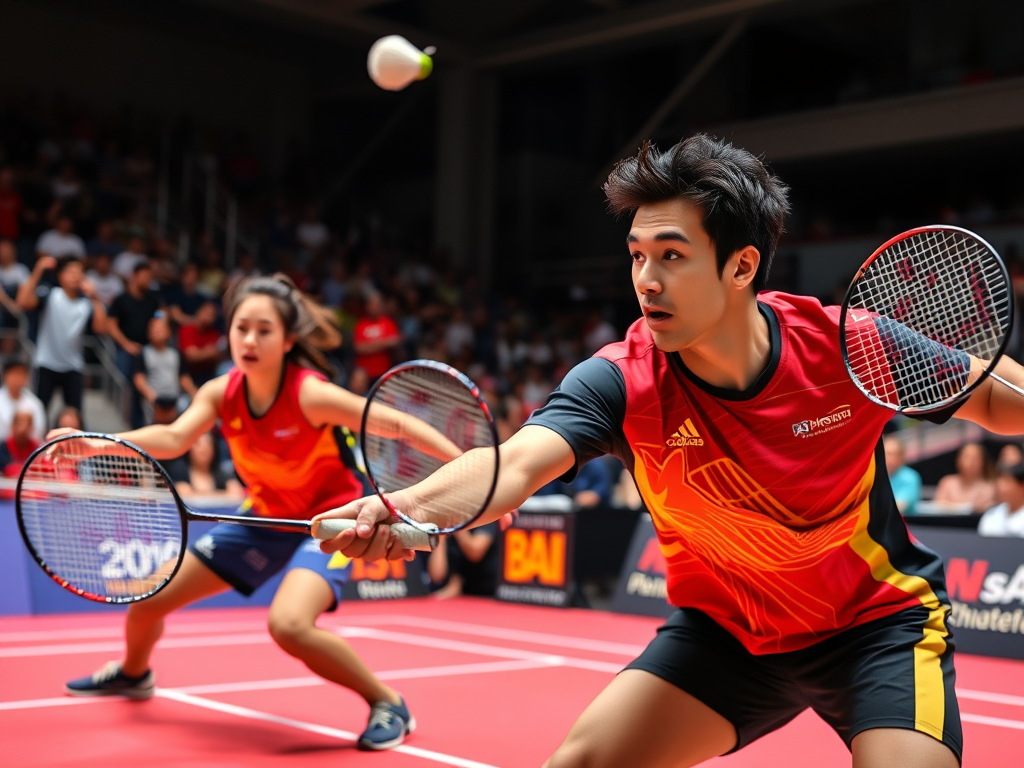
Badminton training significantly enhances both speed and quickness through a combination of targeted exercises, game-specific drills, and the inherent demands of the sport.
- Plyometric and Explosive Training: Exercises like box jumps, squat jumps, and box shuffles have been shown to produce a significant increase in speed among badminton athletes. These plyometric movements develop explosive leg power, allowing players to accelerate rapidly and move efficiently across the court.
- Footwork Drills: Mastering footwork is essential in badminton. Training routines such as the six-corner drill and shadow badminton focus on rapid changes of direction and quick, precise movements, directly improving both speed and quickness.
- Interval and High-Intensity Training: Badminton matches involve short bursts of high-intensity activity followed by brief rest periods. Interval training, which mimics this pattern, enhances both cardiovascular fitness and the ability to perform quick, repeated sprints during play.
- Reaction and Agility Drills: Drills that emphasize reaction time, such as split-step exercises and reaction ball drills, help players respond faster to opponents’ shots, sharpening their quickness and court coverage.
- Game Play and Doubles: The fast pace of doubles matches, with rapid exchanges and constant positional shifts, naturally trains players to react and move quickly, further developing their speed and anticipation.
In summary, badminton training improves speed and quickness by building explosive power, refining footwork, enhancing reaction time, and conditioning players for the sport’s intense, intermittent demands. These adaptations are crucial for success, enabling players to reach and return shots efficiently, outmaneuver opponents, and maintain a competitive edge on the court
 Crius
Crius 
Leave a comment